The post-harvest impact of SeabioSOIL® on the physical, chemical, and biological parameters of the soil was evaluated. The trial was conducted on clay-loam soil with high levels of active limestone. Additionally, the site presented an electrical conductivity of 1.7 dS/m due to irrigation water and historical fertilization. Under this restrictive scenario, tree physiology parameters and available soil moisture in the soil profile were EVALUATED.
1. Water Management and Soil Quality
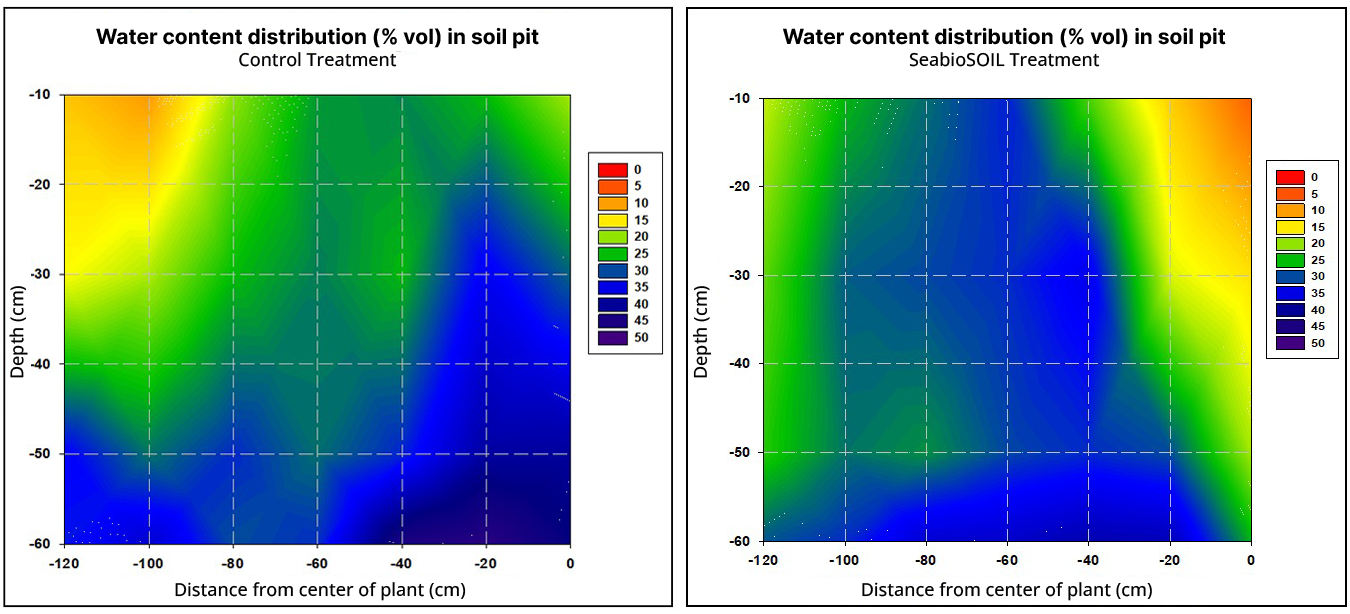
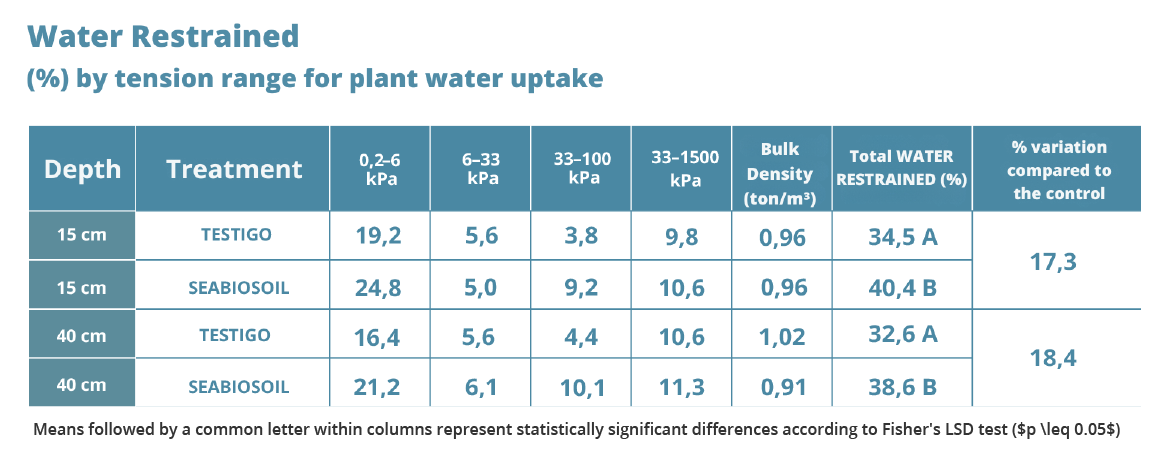
When analyzing bulk density, no increase in soil pore volume was observed between treatments. However, there was a significant increase in water content within the existing pore space, leading to higher moisture levels throughout the soil profile at depths of 15 cm and 40 cm.
- Increase in available moisture: At a depth of 40 cm, 18.4% more water was achieved in the pore space compared to the control group.
- Availability: These modifications allow water to be more accessible to the plant, counteracting the mechanical resistance and water stress typical of clayey and compacted soils.
2. Microbial Mass: Soil Nutrition and Health
Results show that SeabioSOIL® raised the microbial biomass to an “Excellent” level of 495 ug C/g, compared to 171 ug C/g in the control group:
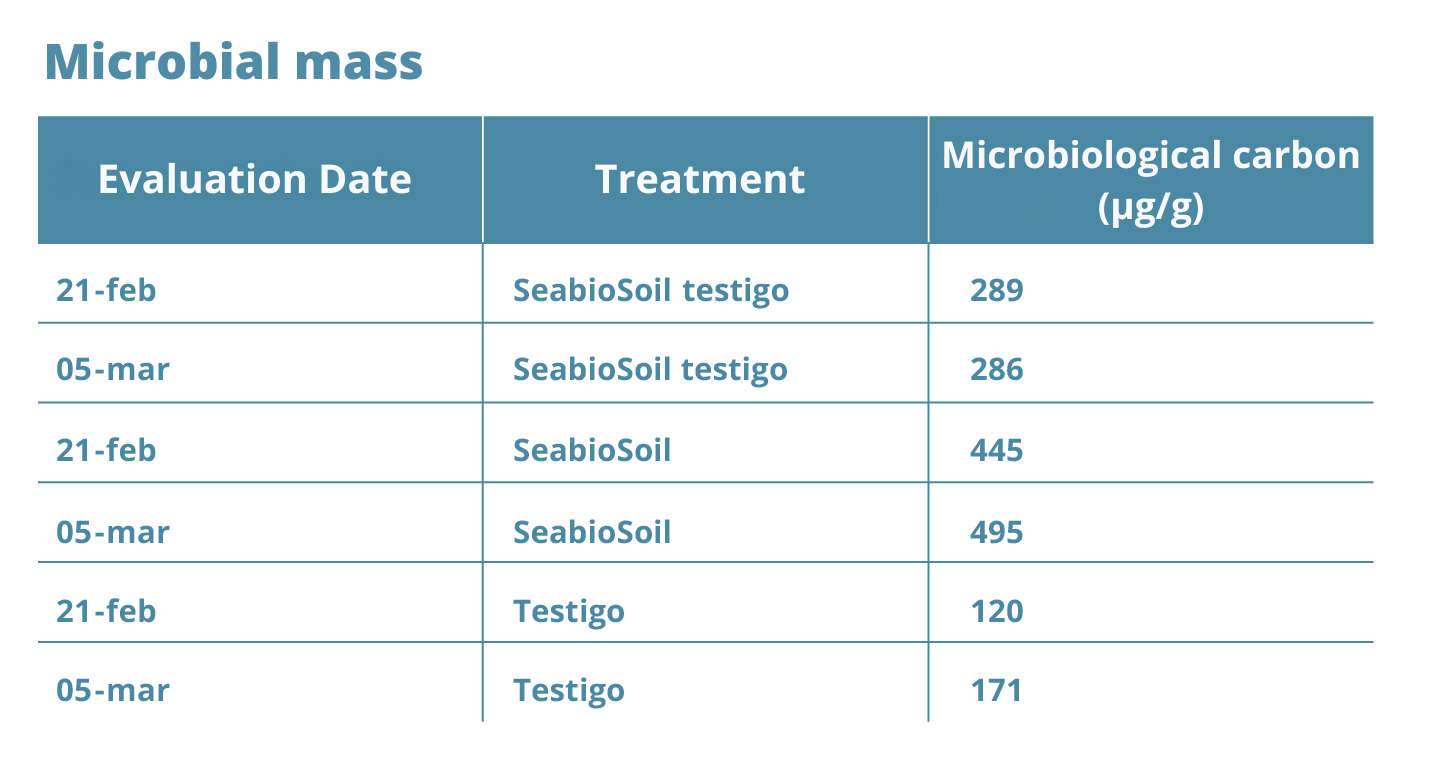
- Living and more resilient soil: The higher the microbial biomass, the greater the potential for nutrient availability and a more balanced and active root system.
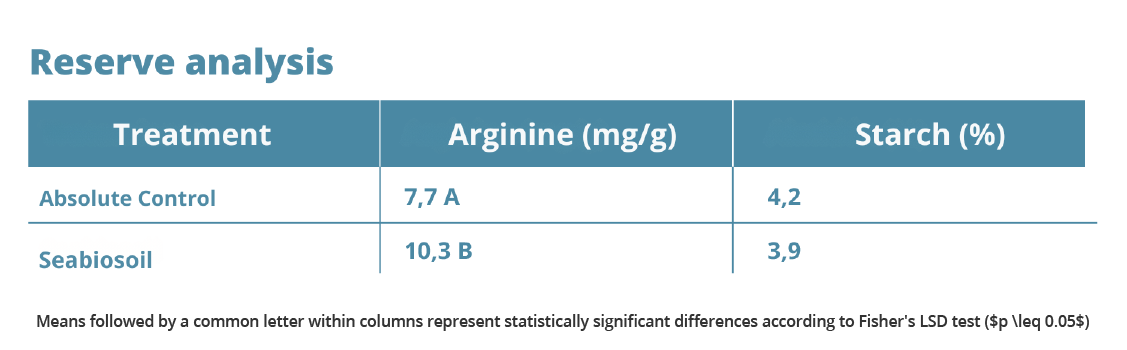
- Arginine and Reserves: SeabioSOIL® applications generate a positive impact on plant metabolism, reflected in the increase of Arginine in the spurs, which rose from 7.7 mg/g to 10.3 mg/g.
- Energy source: These arginine levels within the spurs act as a critical energy reservoir for the following season’s budbreak.
-
Productive success: This increase facilitates improved fruit set and a more vigorous start to the vegetative cycle.